Commercial Cargo Shipping from Dubai: A Complete Guide for Businesses
Commercial cargo shipping Dubai services move the goods that keep businesses trading: stock for shops, raw materials for factories, orders for online customers and equipment for construction sites. If your business buys, sells or makes physical products, you will need a freight partner that can move them across borders reliably, with the paperwork handled properly and the price agreed in advance. This guide explains what commercial cargo shipping from Dubai involves, how it works, what it costs and how long it takes.
Next Movers handles freight shipping in Dubai for businesses of every size, from a single pallet of samples to a full container of stock. We move business cargo by road to the GCC, by sea from Jebel Ali and by air for urgent orders, so this guide covers all three modes and helps you choose the right one for each shipment.
What Is Commercial Cargo Shipping from Dubai?
Commercial cargo shipping is the transport of goods for business purposes: stock, materials, machinery, equipment and orders. It is different from personal shipping because the paperwork, the customs treatment and the insurance all relate to a business transaction, and the shipment usually repeats — weekly, monthly or seasonally. Commercial cargo shipping Dubai services are used by retailers restocking their shops, manufacturers importing raw materials and exporting finished goods, e-commerce sellers fulfilling customer orders, and construction firms moving equipment and building materials to project sites across the region.
A typical business shipment starts with a quote based on the weight, volume and destination, and ends with a signed delivery at the customer’s warehouse or shop. In between, the forwarder collects the goods, packs and palletises them, prepares the export documents, books the transport, clears customs on both sides of the border and delivers to the final address. For the shipper, the value is in having one partner responsible for the whole chain rather than a separate supplier for each step.
Businesses also use commercial freight for the jobs that do not fit a standard parcel service: pallets too heavy for a courier, machinery that needs a flat bed truck, temperature-sensitive goods, or a regular lane that needs a fixed weekly schedule. If you regularly send pallets, our guide to full truck load vs part load cargo explains how to choose between a dedicated truck and a shared one for each load.
Which Shipping Modes Can Businesses Use from Dubai?
Three modes cover almost every business shipment from Dubai, and the right one depends on the size of the load, the destination and the deadline.
Road freight to the GCC. Trucks run daily from Dubai to Saudi Arabia, Qatar, Bahrain, Oman and Kuwait. The main crossings are Al Ghuwaifat into Saudi Arabia and Al Batha for the central and western regions. Road is the natural choice for GCC deliveries: it is door to door, it handles pallets and full loads, and it is usually the best balance of cost and speed for regional trade. A full truck load suits a large single delivery, while shared part loads suit smaller regular restocks.
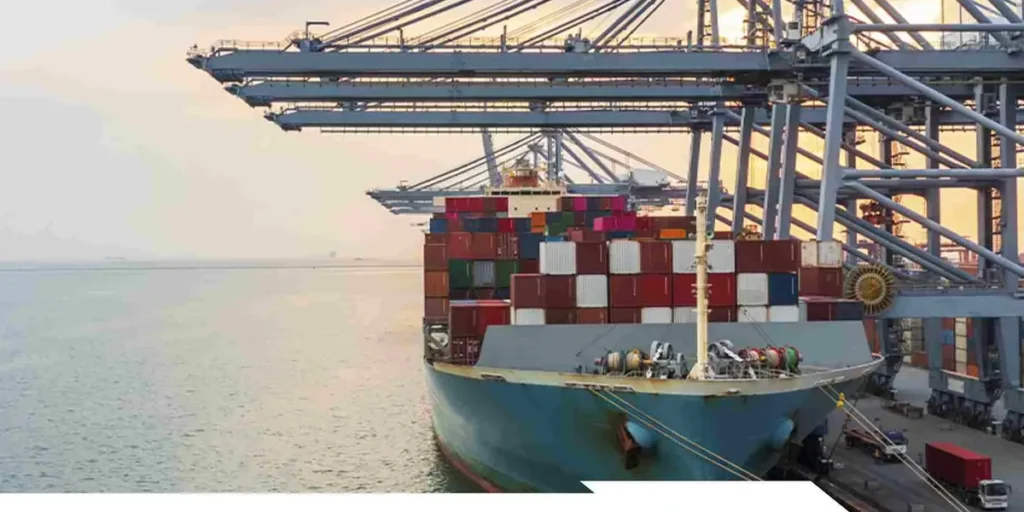
Sea freight from Jebel Ali. For larger volumes and longer distances, sea freight is the most economical option. Full container loads (FCL) suit a whole container of stock, while less than container loads (LCL) let smaller shipments share a container and pay only for the space used. Jebel Ali is one of the busiest ports in the region, with regular sailings to the GCC, the Red Sea, the Mediterranean, Europe and Asia. Sea freight takes longer than road or air, so it suits planned stock rather than urgent orders.
Air freight. For urgent, high-value or time-critical goods, air freight is the fastest option, with flights from Dubai International and Al Maktoum International to destinations worldwide. Air is priced by chargeable weight, so it suits lighter, higher-value goods such as electronics, samples, spare parts and pharmaceuticals. For many businesses, the practical answer is a mix: sea for the bulk of the stock, road for GCC deliveries and air for the urgent top-ups.
How Does Commercial Cargo Shipping from Dubai Work?
Every commercial shipment follows the same seven steps, whether it travels by road, sea or air.
- Get a quote. Share the pickup and delivery addresses, the weight and dimensions, a description of the goods and the date you need them. You will receive a written quote with the mode, the transit time and what is included.
- Book the shipment. Confirm the quote and the collection date. For sea freight, the sailing schedule sets the departure; for road and air, the booking sets the collection slot.
- Collection and packing. The goods are collected from your warehouse, shop or supplier in the UAE, then packed and palletised for the journey. Pallet shipping Dubai services include shrink-wrapping, labelling and, where needed, crating for fragile or awkward items.
- Export declaration. The export declaration is filed in Mirsal 2, the Dubai Customs system, with the commercial invoice, packing list and HS codes. This step is where accurate paperwork matters most: a wrong code or a missing document is the most common cause of delay.
- Transport and border clearance. The goods travel by the chosen mode, and customs clearance is completed on both sides of the border. For Saudi Arabia, that includes the SABER conformity step for regulated goods.
- Delivery. The shipment is delivered to the address you gave — a warehouse, a shop or a project site — and the delivery is signed for. Tracking updates are shared at each stage so you can plan around the arrival.
- Proof and payment. You receive the proof of delivery and the final invoice, with any duties or charges itemised. Regular shippers usually move to a monthly account once the lane is established.
What Documents Do Businesses Need to Ship Cargo from Dubai?
Commercial shipments need a complete document set. Missing paperwork is the single biggest cause of border delays, so gather these before the collection date. Our cargo shipping documents checklist lists every document by shipment type, but the core set is:
- Commercial invoice. The seller’s invoice showing the buyer, the seller, the goods, the quantities, the unit prices and the total value, with the currency and the Incoterm used.
- Packing list. The contents of each pallet, carton or crate, with weights and dimensions, so customs and the receiver can check the load.
- Certificate of origin. Issued by the Dubai Chamber of Commerce or the relevant authority, confirming where the goods were made. Some destinations require it for preferential duty treatment.
- Transport document. A bill of lading for sea freight, an air waybill for air freight, or a road transport document for road freight. This is the contract of carriage and, for sea freight, the document that releases the goods at the destination port.
- Import permits and conformity certificates. Regulated goods may need an import permit or a conformity certificate in the destination country. For Saudi Arabia, many products need SABER registration and a certificate of conformity before they can clear customs.
- HS codes. Every item needs its Harmonised System code, which sets the duty rate and tells customs how the goods are classified. Getting the code right matters: the wrong code can mean the wrong duty or a hold at the border.
Our customs clearance services prepare and check this document set for you, file the Mirsal 2 declaration and handle the clearance on both sides, so your goods are not held up by a paperwork error. Export procedures and requirements are published by Dubai Customs, and our team follows the same official guidance when preparing your declaration.
What Affects the Cost of Commercial Cargo Shipping from Dubai?
Commercial freight is priced per shipment. The cost of commercial cargo shipping Dubai is built from the same factors on every lane, and knowing them helps you compare quotes and, where you can, keep the price down.
Weight and volume. Carriers charge on whichever is greater, the actual weight or the volumetric weight. For sea freight the price is usually per container or per cubic metre; for air it is per chargeable kilogram; for road it is per pallet or per truck. Accurate measurements give you an accurate quote.
Mode of transport. Sea is the cheapest per kilogram for large volumes, road is the cheapest for GCC deliveries, and air is the most expensive but the fastest. Choosing the slowest mode your deadline allows is the simplest way to save money.
Distance and destination. A delivery to Riyadh costs less than a delivery to Jeddah, and a GCC delivery costs less than a shipment to Turkey or Europe. Border crossings, tolls and port charges along the route are part of the price.
Fuel and season. Fuel prices feed directly into freight rates, and peak seasons — the run-up to Ramadan, major retail events and the year-end rush — push prices up when capacity is tight. Booking ahead of a peak is usually cheaper than booking in the middle of it.
Customs and duties. As general guidance only, exports from the UAE are generally not charged UAE export duty, while imports into the destination country are usually charged duty on the CIF value — for example, the standard rate in Saudi Arabia is commonly 5% of the CIF value, although many goods are exempt or charged at a different rate depending on their HS code and any trade agreement. Duties are set by the destination country’s customs authority and can change, so always confirm the current rate for your goods before you quote your customer. Your forwarder should itemise duties and clearance charges separately from the freight so you can see exactly what you are paying for.
For bulk cargo shipping Dubai services, regular volume earns better rates: a business shipping the same lane every week will usually pay less per pallet than a one-off shipper, because the forwarder can plan capacity around the regular load.
What Is the Difference Between DAP and DDP?
Incoterms are the standard trade terms that decide who pays for what and where responsibility passes from seller to buyer. Two of the most used terms for shipments from Dubai are DAP and DDP.
DAP — Delivered at Place. The seller delivers the goods to the named place in the destination country, ready for unloading, and pays the transport to that point. The buyer handles import clearance and pays the import duties and taxes. DAP is the common choice when the buyer has their own customs broker or importer of record in the destination country.
DDP — Delivered Duty Paid. The seller delivers the goods to the named place and also pays the import duties and taxes, handling the import clearance. DDP gives the buyer a single landed price with no customs surprises, but it puts more responsibility — and more risk — on the seller, who needs a broker in the destination country. Choose DDP when your customer wants a simple delivered price, and DAP when they prefer to handle their own import. Either way, agree the term in writing before the goods leave Dubai.
How Long Does Commercial Cargo Shipping from Dubai Take?
Transit times depend on the mode, the destination and the border. These are typical door-to-door guide times for commercial cargo shipping Dubai services, and they can vary with border queues, sailing schedules and public holidays.
- Saudi Arabia by road: Dammam and Al Khobar in around 2–4 days, Riyadh in 3–5 days, Jeddah and Medina in 4–6 days. Our routes for cargo to Al Khobar from Dubai, cargo from Ajman to Madina and cargo from Abu Dhabi to Medina cover the Saudi corridors in detail.
- Qatar, Bahrain, Oman and Kuwait by road: usually 2–5 days depending on the destination and the border crossing.
- Lebanon and Jordan: usually 5–8 days by road or by a road-and-sea combination. See our page on shipping from Dubai to Lebanon for that corridor.
- Egypt and Turkey: usually 7–14 days by road and sea, depending on the port and the sailing schedule.
- Europe by sea: usually 20–35 days from Jebel Ali, depending on the destination port and the service.
- Air freight worldwide: usually 3–7 days door to door, including export and import clearance.
Road freight is the fastest option inside the GCC, sea freight is the most economical for large volumes, and air freight is the fastest for anything urgent. If a delivery date is critical, say so when you request the quote and we will confirm the earliest realistic arrival before you book.
Which Areas Does Commercial Cargo Shipping from Dubai Cover?
From Dubai and the wider UAE, Next Movers covers the whole GCC — Saudi Arabia, Qatar, Bahrain, Oman and Kuwait — as well as Lebanon, Jordan, Egypt, Turkey and destinations across Europe by road and sea. Collections run from Dubai, Abu Dhabi, Sharjah, Ajman, Ras Al Khaimah and the other Emirates, and deliveries are door to door wherever the road network and local rules allow. For longer hauls, sea freight from Jebel Ali reaches ports across the Mediterranean, Europe and Asia, with onward delivery arranged at the destination. Businesses moving staff as well as stock can also use our packers and movers in Abu Dhabi for office relocations. You can find the full list of services on the Next Movers home page, and our terms and conditions set out how bookings, liability and delivery are handled.
What Goods Are Prohibited or Restricted for Commercial Shipping?
Not everything can be shipped, and the rules change by destination and by mode. Prohibited goods — items that cannot be carried at all — usually include narcotics, weapons and explosives, counterfeit goods, and hazardous chemicals without the correct approvals. Restricted goods can be shipped but need a permit, a licence or special handling: examples include food and medicines, which need health approvals; alcohol, which needs a licence in most GCC countries; batteries and aerosols, which are classed as dangerous goods for air freight; and some electronics, which need a conformity certificate in the destination country.

Always declare your goods accurately and ask before you book if you are unsure. A shipment held at the border for an undeclared restricted item costs far more than the few minutes it takes to check. If a product needs a permit in the destination country, apply for it before the goods leave Dubai, because a permit applied for after the shipment has departed rarely arrives in time.
Frequently Asked Questions About Commercial Cargo Shipping Dubai?
What is commercial cargo shipping?
Commercial cargo shipping is the transport of goods for business purposes — stock, materials, machinery and orders — with business paperwork, customs clearance and delivery to a business address. It differs from personal shipping in the documents, the customs treatment and the fact that shipments usually repeat on a regular schedule.
How much does commercial cargo shipping from Dubai cost?
There is no fixed price: the cost depends on the weight and volume, the mode, the destination, fuel and any duties. Sea freight is the cheapest per kilogram for large volumes, road is the cheapest for GCC deliveries, and air is the fastest but the most expensive. Ask for a written quote for your exact shipment, with duties and clearance itemised separately from the freight.
What documents do I need to export cargo from Dubai as a business?
You normally need a commercial invoice, a packing list, a certificate of origin, the transport document (bill of lading, air waybill or road transport document) and the correct HS codes, plus any import permit or conformity certificate the destination requires, such as SABER for Saudi Arabia.
How long does B2B freight from Dubai to Saudi Arabia take?
By road, B2B freight Dubai to Dammam or Al Khobar typically takes 2–4 days, to Riyadh 3–5 days and to Jeddah or Medina 4–6 days, including export and import clearance. Air freight to Saudi Arabia is faster, usually 3–5 days door to door, while sea freight to Jeddah takes longer but costs less per kilogram.
Can a small business use commercial cargo shipping from Dubai?
Yes. Small businesses usually start with part loads or LCL sea freight, paying only for the space they use, and move to full loads as volume grows. Regular small shipments on the same lane often earn better rates once the schedule is established.
Ready to move your business cargo from Dubai? Tell us what you are shipping, where it is going and when it needs to arrive, and we will quote the best mode — road, sea or air — with honest transit times and a clear breakdown of every charge. For businesses weighing up road options, our guide to full truck load vs part load cargo is a useful companion read, and our page on cargo to Russia from Dubai Marina shows how a longer international corridor is handled.