Full Truck Load Transport Services
Full Truck Load Transport From the UAE to the GCC
When your cargo fills a truck, sharing space makes no sense. Our full truck load (FTL) transport service gives you a dedicated truck — your goods only, loaded once, driven directly to the destination and unloaded once. It is the fastest, safest way to move commercial cargo by road, and it is the core of our land freight and road transport work from Dubai to the GCC.
Full Truck Service — How It Works
- You book the whole truck: box, flatbed or lowbed, sized to your load
- We collect from your warehouse, factory or site anywhere in the UAE
- Export documents are prepared in advance; the truck clears the border with our customs clearance services support
- Direct drive to the destination — no depot transfers, no co-loading
- Door-to-door delivery with a single point of contact throughout
Choose the Right Full Truck
Full truck bookings use the trailer that fits the cargo: enclosed box trucks for palletised and weather-sensitive goods, flat bed trucks for steel, pipes and long loads, and lowbed trailers for heavy machinery. Standard full-size trailers carry roughly 24 to 28 tons of palletised cargo, with heavier configurations available for project loads.
Full Truck Routes: UAE to All GCC Countries
Dedicated trucks run daily from the UAE to Saudi Arabia, Kuwait, Bahrain, Oman and Qatar, and regularly to Jordan, Syria, Lebanon and Egypt. The busiest FTL lanes are our Dubai to Saudi Arabia cargo service, road cargo to Qatar and road cargo to Bahrain. Smaller shipments that do not fill a truck can move as part loads on the same routes — ask us which option fits your volume.
Why Book a Full Truck With Next Movers?
- Dedicated truck — your cargo only, no sharing or transhipment
- Faster transit and lower damage risk than part-load shipping
- Box, flatbed and lowbed options up to heavy project loads
- Customs, permits and border clearance handled for you
For a full truck quote, call +971 54 480 5814 or email info@nextmovers.ae with your cargo, pickup point and destination.
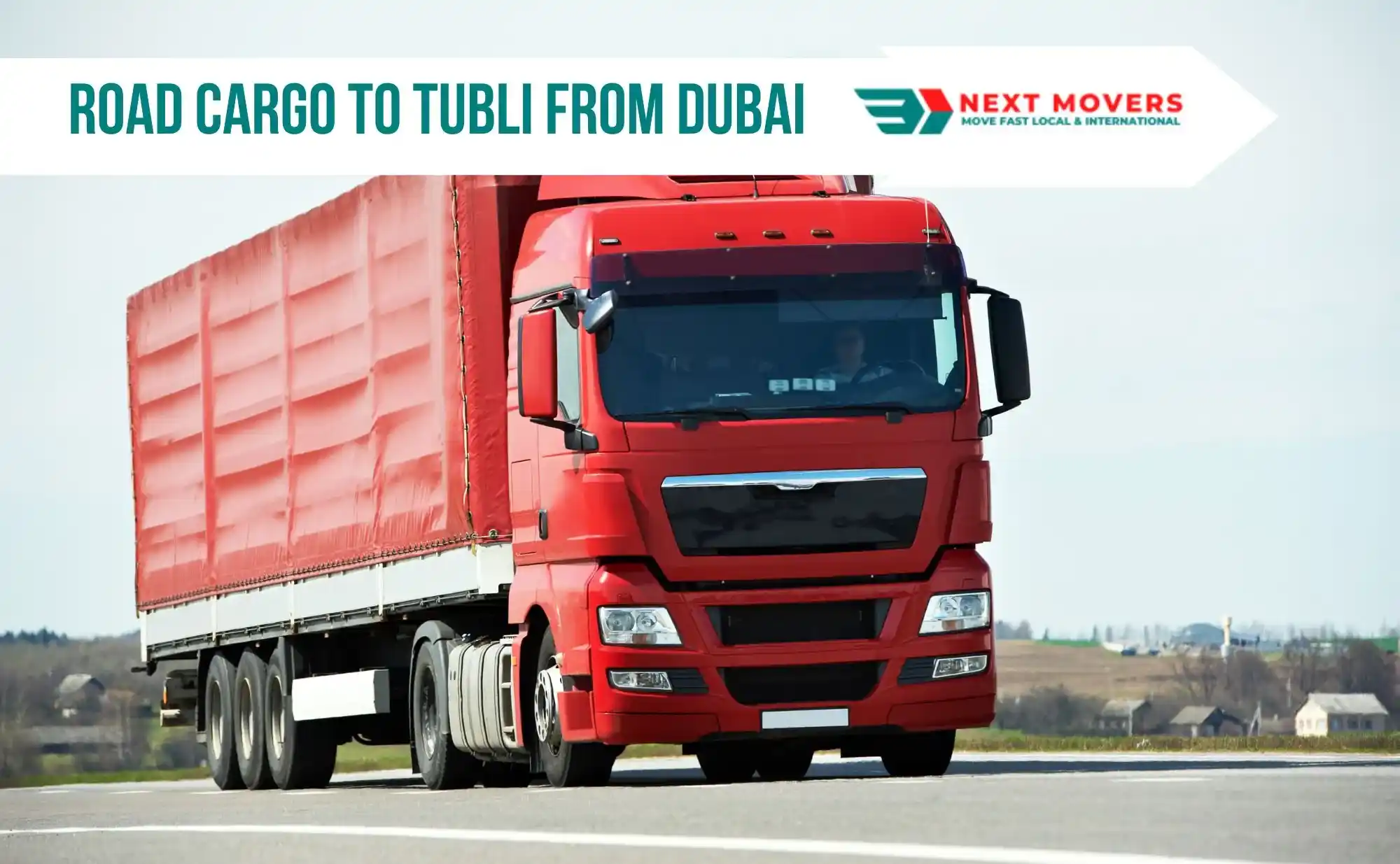
What Trucks and Trailers Do We Use for Full Truck Loads?
Choosing the right truck matters as much as choosing the right route. A truck that is too small means a second trip; a truck that is too big costs more than it should. We match the truck to your cargo, and these are the main types we work with.
Box Trucks and 13.6 m Semi-Trailers
The standard full truck load unit is the 13.6-metre box or curtain-side semi-trailer, which is the workhorse of GCC road freight. It carries general cargo, pallets, cartons and crated goods, and a standard full-size trailer carries roughly 24–28 tons, depending on the cargo and the route. Your goods travel inside a closed trailer, protected from dust, sun and rain, and the trailer is loaded once and sealed for the journey.
Flat Bed Trailers (12–15 m)
Flat beds, usually 12–15 metres long, are used for cargo that cannot go inside a box trailer: long steel, pipes, timber, machinery, coils and oversized items that need to be lifted on by crane or forklift. The load is secured with chains, straps and edge protectors, and covered with tarpaulin where the cargo needs weather protection.
Lowbed Trailers
Lowbed trailers sit close to the ground, so they can carry tall and heavy machinery that would be too high on a flat bed — excavators, generators, industrial equipment and oversized plant. Lowbed moves need more planning, including route checks for height and weight limits, and we arrange that as part of the booking.
Refrigerated (Chiller) Trucks
For food, beverages, medicines and other temperature-sensitive goods, we can supply refrigerated trucks that hold a set temperature for the whole journey. The cold chain is kept from loading to delivery, which is essential for foodstuffs and pharmaceuticals travelling across the Gulf in summer heat.
Smaller Trucks for City and Short-Haul Moves
Not every full truck load needs a trailer. For smaller loads, warehouse transfers and deliveries in tight city areas, we use 3-ton and 7-ton box trucks and pickups. They are easier to load at shops and small warehouses and can reach places a 13.6 m trailer cannot.
What Is the Difference Between FTL and LTL?
FTL (full truck load) means you book the whole truck for your cargo alone. LTL (less than truck load, or part load) means your cargo shares a truck with other shippers. Both have their place, and the right choice depends on your load.
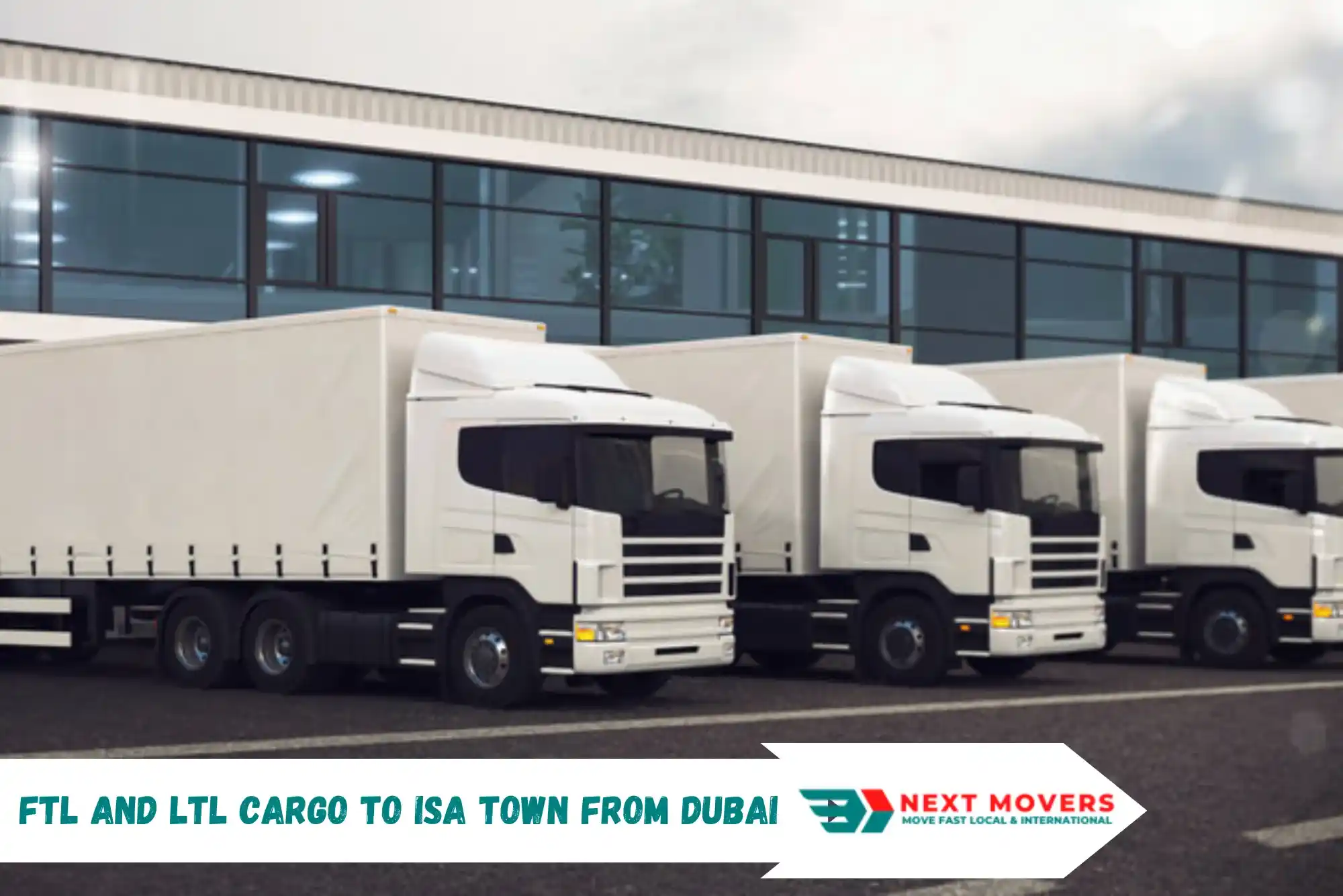
- Choose FTL when your cargo fills most of a truck, when the goods are urgent, when the cargo is fragile or high-value and should not be handled again, or when you need a fixed pickup and delivery time. FTL is faster, because the truck goes straight from your loading point to the destination without stopping to collect or deliver other loads.
- Choose LTL when your load is small — a few pallets or a few hundred kilos — and the delivery date can be flexible. You pay only for the space your cargo uses, which is cheaper for small shipments, but the truck may stop at several points along the way, so transit takes longer and the cargo is handled more often.
As a simple guide: if your load is more than about 10 pallets, or more than half a trailer, FTL is usually better value as well as faster. If it is a small shipment and the timing is flexible, ask us about a part-load option and we will quote both, so you can compare honestly.
How Does a Full Truck Load Move Work, Step by Step?
A full truck load move is planned like a project, even a small one, so that nothing is left to chance at the border or at the loading dock.
- Enquiry and survey: Tell us what the cargo is, how much there is, the size and weight of the largest pieces, and the pickup and delivery addresses. For unusual loads — machinery, long steel, tall equipment — we may ask for photos or a quick site survey, so the right trailer is booked first time.
- Written quote: We confirm the truck type, the route, the expected transit time and the price in writing, including customs and border handling where it applies. There are no hidden charges added later.
- Loading: On the agreed day, the truck arrives at your warehouse, factory or site. Your team loads, or we provide loading help and the right equipment. The load is balanced, lashed and secured, and the trailer is closed or covered before departure.
- Transit with updates: The truck drives directly to the destination, without depot transfers or co-loading. We keep you updated on progress, and you have one point of contact for the whole move.
- Border crossing: For GCC and Levant destinations, the export and import documents are prepared in advance, and the truck clears the border with our customs team. Goods are declared correctly, so delays at the border are kept to a minimum.
- Delivery and unloading: The truck arrives at the delivery address, the cargo is checked against the packing list, and it is unloaded with your team. You sign the delivery note, and the job is complete.
Transit times depend on the route. A UAE-to-Saudi Arabia or UAE-to-Qatar move is typically a matter of days, door to door, including border formalities. Longer routes to Jordan, Lebanon or Egypt take longer and depend on the border crossings involved, and we will give you a realistic time frame when you book.
What Affects the Cost of a Full Truck Load?
Full truck load prices are quoted per trip, because every load and every route is different. These are the main factors that decide the price:
- Distance and route: A move within the UAE costs less than a move to Saudi Arabia, and a long route to Jordan or Egypt costs more again, because of distance, fuel and tolls.
- Truck and trailer type: A standard box trailer is the most economical choice. Flat beds, lowbeds and refrigerated trucks cost more, because they are specialist equipment and carry fewer loads.
- Load weight and volume: Heavier and larger loads may need a bigger truck, a lowbed or a special permit, all of which affect the price.
- Loading and unloading help: If you load and unload with your own team, the price is lower. If you need our crew, a forklift or a crane, that is added to the quote.
- Waiting time: Trucks are booked for a loading window. Long waits at loading or unloading — for example, if the warehouse is not ready — can add waiting charges, so it pays to have the cargo ready when the truck arrives.
- Border crossings and documents: Cross-border moves include customs declarations, export papers and sometimes permits. We include these in the quote so you can see the full cost up front.
- Urgency: A truck booked in advance is usually cheaper than an urgent or same-day truck, because we can plan the route and the return load.
To get an accurate price, share the cargo details, the pickup point and the destination with us. We will quote the right truck for the job, not the biggest one, so you pay for what you need and nothing more.
What Documents Are Needed for GCC Road Freight?
Cross-border road freight needs the right documents, and preparing them before the truck leaves avoids delays at the border. For most GCC road freight jobs from the UAE, the shipper provides:
- Commercial invoice: A detailed invoice showing the goods, their value, the shipper and the consignee. This is the main document customs uses to assess the shipment.
- Packing list: A list of the cartons, pallets or crates, with weights, dimensions and marks, so the cargo can be checked at loading and at the border.
- Certificate of origin: A document stating where the goods were made, which is required for many GCC destinations and can affect the duty payable.
- Export declaration: The UAE export declaration for the goods leaving the country, prepared before departure.
- Transport documents: The consignment note or bill of lading for the road journey, and the driver’s ID and vehicle papers.
- Product-specific permits: Some goods, such as food, medicines, chemicals and certain machinery, need extra permits or certificates. Tell us what you are shipping when you book, so we can check what applies.
Our customs clearance services team can prepare and check these documents with you, so the truck is not held at the border for paperwork. Keep a copy of the invoice and packing list with the driver and a copy with the person receiving the goods.
Which Routes and Destinations Do Our Full Trucks Cover?
Our full trucks run daily from the UAE to Saudi Arabia, Kuwait, Bahrain, Oman and Qatar, with regular services to the main cities and industrial areas in each country. Beyond the GCC, we also run regular road freight to Jordan, Lebanon and Syria, and to Egypt, using road and ferry crossings as the route requires. Within the UAE, we cover Dubai, Abu Dhabi, Sharjah, Ajman, Ras Al Khaimah, Fujairah and Umm Al Quwain, including Jebel Ali Free Zone, Dubai Industrial City, Mussafah and Hamriyah Free Zone.
Popular lanes include Dubai to Riyadh and Dammam, Dubai to Doha, and UAE to Kuwait City. For cargo that needs to go further, we combine road freight with sea or air freight where it makes sense, and we can also move your goods with our land freight and road transport service if a full truck is more than you need.
Frequently Asked Questions
How much can a full truck load carry?
A standard 13.6 m trailer carries roughly 24–28 tons, depending on the cargo and the route. Flat beds and lowbeds carry heavy and oversized loads, while smaller box trucks carry lighter loads for city and short-haul moves. Tell us the weight and size of your cargo and we will book the right truck.
How long does a full truck load take from the UAE to Saudi Arabia?
A UAE-to-Saudi Arabia move is typically a matter of days, door to door, including the border formalities. Longer routes to Jordan, Lebanon or Egypt take longer, and we will give you a realistic time frame when you book, based on the destination and the border crossings involved.
Can you load and unload the truck for me?
Yes. If you have your own team and equipment, we will work with them. If you need loading help, a forklift or a crane, tell us when you book and we will include it in the quote, so the truck is not left waiting at the dock.
What is the difference between FTL and part load?
With FTL you book the whole truck for your cargo alone, so it goes directly from pickup to delivery. With part load (LTL) your cargo shares a truck with other shippers, which costs less for small shipments but takes longer, because the truck stops at several points along the way.
Do you handle customs and border clearance?
Yes. We prepare the export documents in advance and clear the truck at the border with our customs team, so your cargo is not held up for paperwork. You provide the commercial invoice, packing list and certificate of origin, and we handle the rest of the process with you.
For a full truck quote, call +971 54 480 5814 or email info@nextmovers.ae with your cargo details, pickup point and destination. We will confirm the truck type, the price and the loading date in writing, and keep you updated until the cargo is delivered.