Packing Tips for House Moving in Dubai: A Complete Checklist

Packing is where most house moves are won or lost. The boxes you choose, the way you wrap fragile items, and the labels you write decide whether moving day runs smoothly or ends with broken glass and a frantic search for the kettle. In Dubai, where moves often involve high-rise lifts, villa stairs and summer heat, good packing matters even more.
These packing tips for house moving in Dubai cover materials, fragile items, furniture, labelling and a moving-day checklist — whether you pack yourself or hire professionals.

When Should You Start Packing for a House Move in Dubai?
Start two to three weeks before moving day, and pack room by room. Begin with the things you use least — books, out-of-season clothes, decorations — and leave daily essentials for the last box. Packing a little each day is far easier than a single frantic weekend, and it gives you time to declutter: anything you have not used in a year is a good candidate to sell, donate or leave behind.
If your building needs a move-out permit or a service lift booking, arrange it early — many Dubai towers only allow moves at set hours. Your mover can usually handle the permit paperwork, so confirm it when you book.
What Packing Materials Do You Need?
Good materials are cheaper than replacing broken things. You need sturdy double-walled boxes in two or three sizes, bubble wrap, packing paper, strong tape and a marker pen. Small boxes are for heavy things like books; large boxes are for light things like bedding and clothes. Never fill a large box with books — it will be too heavy to lift and the bottom will give way.
Specialist boxes are worth it for the items that break most often: dish-pack boxes for kitchenware, wardrobe boxes for hanging clothes, and picture boxes for mirrors and framed art. If you are moving electronics, keep the original boxes where you have them — they are shaped for the item and its foam inserts.
How Much Does Professional Packing Cost in Dubai?
Professional packing in Dubai is usually quoted as part of the whole move, but as a guide, full packing for a one-bedroom flat adds roughly AED 500 to AED 1,000 to the moving price, and for a three-bedroom villa AED 1,500 to AED 3,000, depending on how much you own and how fragile it is. The price covers the materials, the packers’ time, and the labelling.
What affects the price is the volume of items, the amount of fragile and specialist packing (artwork, mirrors, chandeliers, pianos), and whether you want a full service or a partial one — for example, professionals pack only the kitchen and fragile items while you pack the rest. Partial packing is a good middle option if your budget is tight: you save money and the breakable things are still packed by people who do it every day. When you compare quotes, check whether materials are included or charged separately, and whether unpacking at the new home is part of the price.
What Should You Pack Room by Room?
Packing room by room keeps the move organised and makes unpacking far faster. Start with the rooms you use least and finish with the kitchen and bathroom on the last day.
Kitchen: pack plates vertically like records, wrap glasses individually, and keep a small box of first-day essentials — kettle, mugs, a few plates, basic cutlery — separate so you can eat on arrival night. Bedrooms: use wardrobe boxes for hanging clothes so they arrive crease-free, and pack bedding in large light boxes. Living room: wrap electronics in anti-static bubble wrap, coil cables and label them, and pack books in small boxes. Children’s rooms: let children pack a small bag of their favourite toys themselves — it keeps them involved and gives them something familiar on the first night. Bathroom: seal bottles in plastic bags in case they leak, and keep medicines and toiletries in your essentials box, not in the truck.
How Do You Pack Fragile Items Safely?
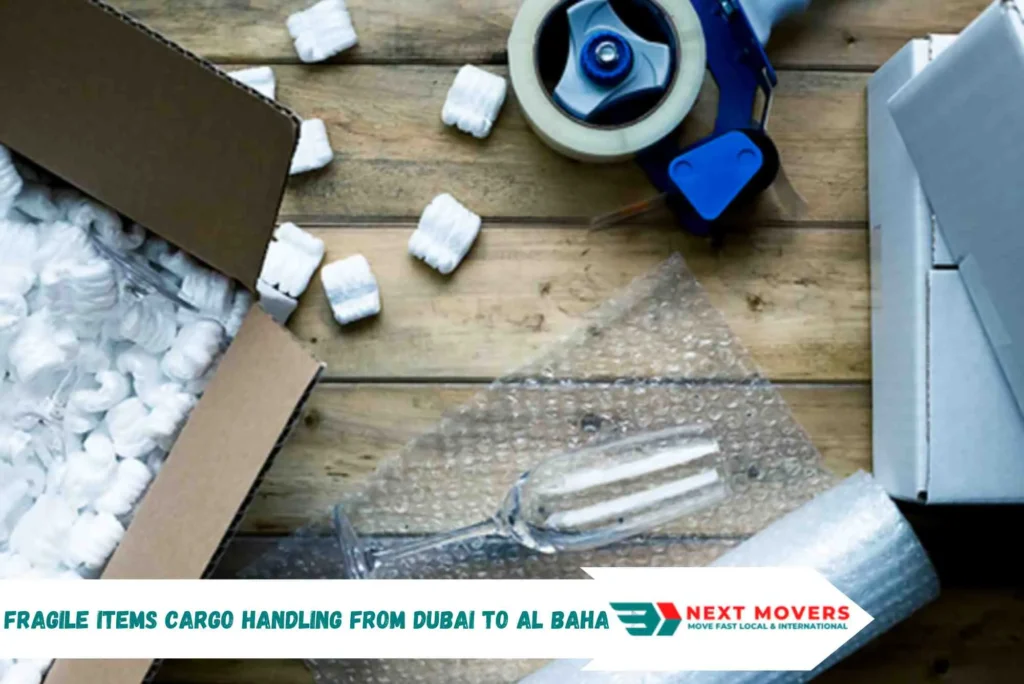
Wrap every fragile item individually, then fill every gap in the box with crumpled paper so nothing can move. Plates should be packed vertically, on edge like records, not stacked flat — flat stacks concentrate pressure and crack. Glasses and cups go in one at a time, with paper between them, and the box is marked fragile on at least two sides.
For mirrors and framed art, tape an X across the glass, fit corner protectors, and use a picture box that fits snugly. For televisions and monitors, use anti-static bubble wrap rather than packing paper against the screen, and never lay a flat-screen TV face down. If the item is valuable, check whether your move is covered — our cargo insurance guide for Dubai explains what a standard policy covers and when extra cover is worth it.
How Do You Pack Electronics and Appliances?
Electronics are the items most often damaged in a move, usually because they were packed in a box that was too big with nothing to stop them moving. Use the original box and foam inserts if you still have them — they are shaped for the item. If not, wrap the item in anti-static bubble wrap, place it in a snug box, and fill every gap with crumpled paper so the item cannot shift.
Photograph the back of every device before you unplug it, so you know exactly which cable goes where. Coil cables separately, label them, and put them in a bag taped to the device they belong to. Remove batteries from remotes and small devices, and back up computers and hard drives before moving day — a dropped hard drive cannot always be recovered. For large appliances such as washing machines, secure the drum with transit bolts if the manufacturer supplied them, tape the doors shut, and let the movers handle the disconnection.
How Should You Pack Furniture for Moving?
Measure first: check that wardrobes, beds and sofas fit through the doors, corridors and lift at both ends. If a piece cannot pass whole, dismantle it and keep the screws and fittings in a labelled bag taped to the furniture. Wrap wooden furniture in blankets or stretch film to protect it from scratches, and use corner protectors on tables and sideboards.
Drawers should be emptied before the move — a full chest of drawers is heavy, and the weight can break the runners on stairs. For a full guide to moving furniture across borders, see our furniture shipping guide from Dubai, and if the furniture is travelling to Russia, our cargo from Sharjah to Russia page explains the packing and container options.
How Do You Label Boxes So Unpacking Is Easy?
Label every box on at least two sides with the destination room and a short list of contents — “Kitchen — plates, mugs, cutlery” is far more useful than “Kitchen”. Colour-code by room if you have many boxes: one colour per room, marked on the box and on the door of the room it belongs in. Mark fragile boxes clearly, and add an arrow showing which side is up.
Number the boxes and keep a simple list on your phone: box 12 is the one with the Wi-Fi router and chargers, so it is the first one you open. That list saves more time on arrival day than any other packing habit.
What Goes in Your Essentials Box?
Pack one box — or a suitcase — with everything you need on the first night: phone chargers, toiletries, a change of clothes, bedding, basic kitchenware, medicines, important documents and the kettle. Keep it with you in the car, not in the truck, so it is the first thing you can reach when you arrive.
Documents deserve special care: passports, tenancy contracts, car papers and the moving inventory should travel with you, never in a sealed box in the truck.
What Are the Most Common Packing Mistakes to Avoid?
The most common mistake is overfilling boxes: a box that is too heavy breaks at the bottom, hurts the person carrying it, and crushes the boxes stacked under it. Keep every box under about 20 kilograms, and use small boxes for heavy things. The second mistake is leaving empty space inside a box — unfilled gaps let items move and break, so fill every gap with paper or soft clothing.
Other mistakes to avoid: using old, weak boxes from the supermarket that collapse when stacked; forgetting to label boxes, which turns unpacking into a treasure hunt; packing liquids and cleaning products with clothes and bedding, where a leak ruins everything; and leaving packing until the last day, when tired decisions replace careful ones. A little planning at the start of the week saves a whole day of frustration at the end of it.
Should You Pack Yourself or Hire Packers and Movers?
Packing yourself saves money and works well for a small flat with few fragile items. For a villa, a large family home, or a move that includes antiques, artwork or a piano, professional packers are usually worth it: they bring the right materials, pack a whole house in a day, and take responsibility for the packing. Our packers and movers in Abu Dhabi team offers full packing as part of the move, and if your move includes a car, our guide to shipping a car from Dubai explains the transport and paperwork.

Frequently Asked Questions
How many boxes do I need for a house move in Dubai?
As a rough guide, a studio needs 10 to 15 boxes, a one-bedroom flat 20 to 30, and a three-bedroom villa 60 to 80, plus specialist boxes for fragile items. Your mover can estimate the number after a quick survey of the home.
Can movers pack everything for me?
Yes. Full packing is a standard service: the team brings boxes, bubble wrap and tape, packs room by room, labels everything and unpacks at the other end if you ask. You only need to keep your essentials box and documents with you.
Do movers provide the packing materials?
Yes, professional movers bring all the materials — boxes, bubble wrap, tape, blankets and stretch film — as part of a full packing service. If you pack yourself, you can buy materials from the mover or from packaging suppliers in Dubai; ask your mover for a materials list and quantities before you start.
How long does packing a villa take?
A professional team of three to four packers usually packs a three-bedroom villa in one full day. Packing the same villa yourself takes most people three to five evenings, so if your moving date is fixed, start early or hire help for at least the fragile items and the kitchen.
How do I pack electronics for a move?
Use the original box and foam if you have it. Otherwise wrap the item in anti-static bubble wrap, place it in a snug box with paper filling every gap, and mark the box fragile. Remove batteries and back up computers before moving day.
What should I not pack in the moving truck?
Keep passports, jewellery, cash, medicines, chargers and important documents with you. Flammable items such as gas cylinders, paint and aerosols should not go in the truck at all — ask your mover how to dispose of them safely.
Good packing is mostly patience: the right box, enough padding, and a label that tells the truth. Do that for every box and moving day becomes a delivery, not a rescue — and if you would rather not pack at all, request a free quote and let Next Movers handle the packing for you.
Related Reading: Refrigerated Cargo Transport from Dubai: A Complete Guide — full guide