Do You Need Cargo Insurance When Shipping from Dubai?
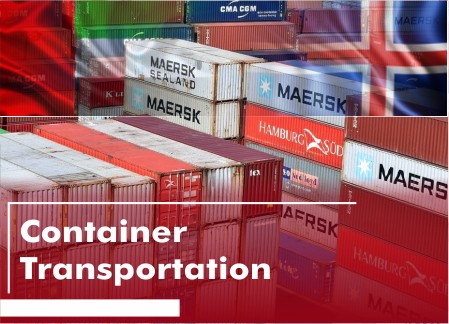
Every shipment that leaves Dubai carries a risk. A container can be damaged at sea, a truck can be in an accident on the road to Saudi Arabia, and a pallet can simply go missing at a port. The carrier will only pay a small, capped amount for the loss — and in many cases, nothing at all. That gap is what cargo insurance exists to close.
This guide explains cargo insurance in Dubai in plain terms: what it covers, the difference between Institute Cargo Clauses A, B and C, what it costs, and when you actually need it.
What Is Cargo Insurance?
Cargo insurance is a policy that protects the value of your goods while they are being transported. Despite the name “marine cargo insurance”, it covers goods moving by any mode — sea, air, road or rail — from the moment they leave the supplier until they arrive at the destination.
In the UAE, cargo insurance is governed by Federal Decree-Law No. 43 of 2023 (the Maritime Law), which recognises internationally accepted insurance clauses such as the Institute Cargo Clauses. Most policies are written on those standard clause sets, so the same terms are used by insurers in Dubai, London and Singapore.
What Does Cargo Insurance Cover?
A cargo policy covers physical loss of, or damage to, your goods during transit. Depending on the clause set you buy, that includes fire, sinking, stranding, collision, general average and salvage charges, water damage, theft and pilferage, and damage during loading and unloading.
Good policies also cover the costs that follow a loss — for example, the cost of forwarding the goods to their destination after an accident, or your share of general average if the vessel declares one. You can also insure the freight and duty paid, not just the invoice value, so a claim replaces the full landed cost of the goods.
Cover normally runs warehouse to warehouse: it starts when the goods leave the warehouse at origin and ends when they reach the warehouse at destination. If your goods sit in a bonded warehouse or wait on a quayside outside those points, they may not be covered at all, so check exactly where your cover starts and ends.
What Are Institute Cargo Clauses A, B and C?
The clause set you buy defines exactly what your goods are protected against. There are three standard levels:
- Clause A — all risks. The broadest cover. It protects against all risks of loss or damage, except the exclusions listed in the policy — such as wilful misconduct, ordinary leakage, inherent vice and delay. This is the only clause that responds to dents, scratches, handling damage, theft and pilferage, which are the most common claims on a normal shipment.
- Clause B — named perils. Mid-level cover for major casualties such as fire, explosion, sinking, stranding and collision, plus water damage and loss of a unit dropped during loading or discharge. It does not cover theft, shortage or non-delivery.
- Clause C — major casualties only. The narrowest and cheapest cover, limited to major events such as fire, sinking and collision. It is usually reserved for bulk cargoes where the risk of partial loss is low.
War, strikes, riots and civil commotion are not included in any of the three clauses — they need separate Institute War and Strikes Clauses added to the policy. Under Incoterms 2020, a seller selling on CIF terms only has to buy Clause C cover by default, while CIP requires Clause A, so always check what your supplier has actually bought.
How Much Does Cargo Insurance Cost in Dubai?
As a rough guide, marine cargo insurance in Dubai typically starts from around 1% of the insured value for total-loss-only cover, and from around 1.75% for all-risks cover. The exact premium depends on the value of the goods, the route, the mode of transport, and the type of cargo — fragile or high-value goods cost more to insure.
The insured value is usually the CIF value of the goods plus 10%, which covers the freight and a margin for profit. For a shipment worth AED 100,000, all-risks cover therefore costs roughly AED 1,750 to AED 2,500 — a small amount next to the value at risk. A single transit policy covers one specific shipment; if you ship regularly, an annual open cover policy insures every shipment automatically and usually works out cheaper per shipment.
Do You Need Cargo Insurance for Road Cargo to Saudi Arabia?
Yes, if the goods matter to you. Road cargo from Dubai to Saudi Arabia, Qatar, Oman, Kuwait and Bahrain travels long distances in desert heat, crosses at least one border, and changes hands at loading and unloading. The carrier’s liability is limited — under the Hague-Visby Rules that many bills of lading follow, it is capped at 666.67 units of account per package or 2 units per kilo of gross weight, whichever is higher. That rarely covers the real value of commercial goods.
For road freight, ask for an inland transit clause or an all-risks policy that expressly includes the road leg. Next Movers runs regular cargo to Al Khobar from Dubai and other GCC destinations, and can arrange cover for the full door-to-door journey, including the border crossing.
What Is Not Covered by Cargo Insurance?
No policy covers everything. Standard exclusions include wear and tear, delay, loss caused by poor packing or preparation, inherent vice (goods that spoil or break down by their own nature), and losses you already knew about before the policy started. War and strikes need separate cover, as noted above.
Good packing matters twice: it protects the goods, and it protects the claim. If goods were packed badly, the insurer can refuse the claim — so keep photos of the packing, the packing list and the condition of the goods at loading.
How Do You Make a Cargo Insurance Claim?
If goods arrive damaged or short, act quickly. Note the damage on the delivery receipt before you sign it, photograph everything before unpacking, keep the damaged goods and packaging, and notify the insurer and your forwarder immediately — most policies require notice within days, not weeks.
You will need the policy or certificate, the commercial invoice, the packing list, the bill of lading or airway bill, and the survey report if one was arranged. The insurer appoints a surveyor to inspect the damage, and settlement follows once the cause and value are agreed. Keeping a complete paper trail from booking to delivery is the single best way to make a claim go smoothly.
Frequently Asked Questions
Is cargo insurance compulsory when shipping from Dubai?
No, it is not compulsory by law for most shipments. It is strongly recommended whenever the goods are valuable, fragile or irreplaceable, because the carrier’s liability is capped and often covers only a fraction of the real value.
What is the difference between Clause A and Clause C cover?
Clause A is all-risks cover — it responds to almost any accidental loss or damage, including dents, scratches and theft. Clause C only covers major casualties such as fire, sinking and collision, and does not pay for partial damage or theft.
Does cargo insurance cover the road leg to Saudi Arabia?
Yes, if the policy includes inland transit or warehouse-to-warehouse cover for the road journey. Ask for this expressly when you book road cargo to the GCC, because a sea-only policy may end at the port.
How is the insured value of my cargo calculated?
The usual basis is the CIF value of the goods plus 10%, which covers the freight and a small margin. You can also insure the freight and duty paid so that a claim replaces the full landed cost.
Can Next Movers arrange cargo insurance for my shipment?
Yes. Tell us what you are shipping, its value and the destination, and we will arrange suitable cover as part of your shipment — request a free quote to start.
Cargo insurance is cheap compared with the value it protects. If you are shipping goods that you cannot afford to lose, insure them — and check that the policy covers the whole journey, warehouse to warehouse.
Related Reading: Refrigerated Cargo Transport from Dubai: A Complete Guide
Related Reading: What Documents Do You Need to Ship Cargo from Dubai? — full guide